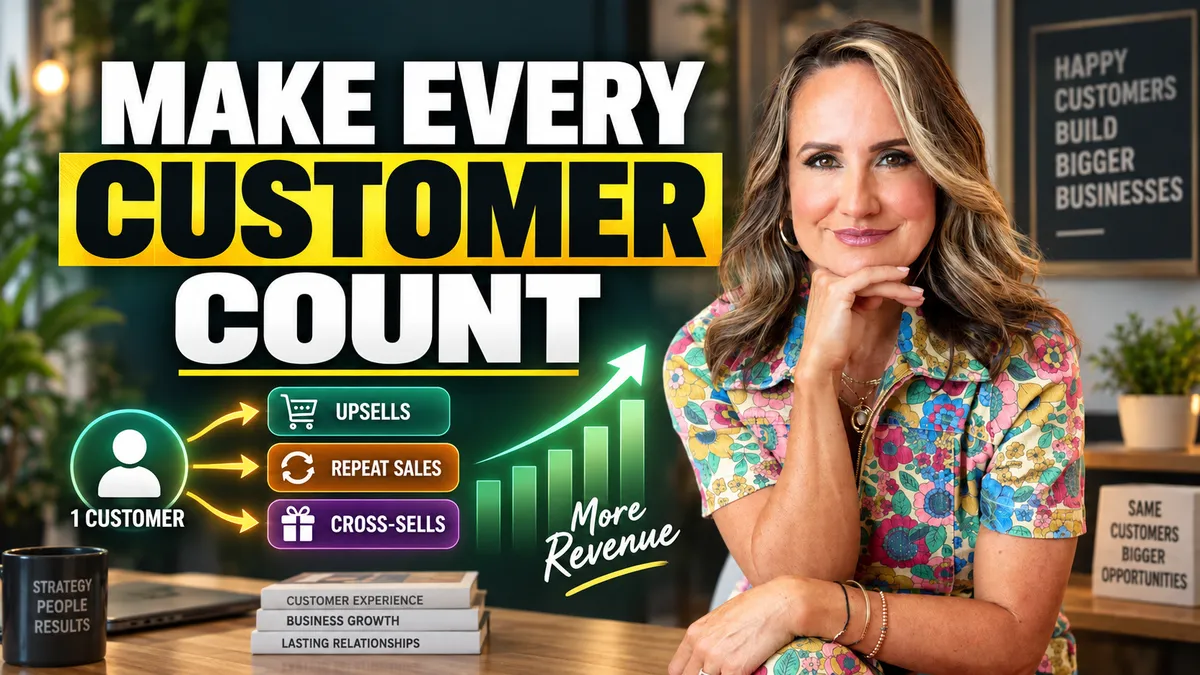
How to Increase Revenue From Every Customer | iFly’s Upsell and Repeat Sales Strategy
"Your responsibility is not to make the decision for them. Your responsibility is to make the value super, super clear." - Michelle Terpstra
If you think iFly is just selling indoor skydiving, you are missing the real business model.
What looks like a short burst of fun is actually a carefully designed revenue ladder that turns a first visit into upgrades, repeat visits, group bookings, and cross-sells.
I recently watched this in action at iFly in Ogden, Utah. It was a masterclass in how to sell more without making customers feel pressured. The key is not simply adding more products. It is creating a customer journey where each offer naturally leads to the next.
How iFly Turns Two-Minute Thrills Into a Revenue Machine
Most businesses stop selling too soon
Many businesses spend significant time and money attracting customers. They run ads, create content, answer questions, follow up with leads, and build enough trust for someone to make a purchase.
Then the customer says yes, and the selling stops.
That is an expensive way to grow.
The customer has already given you their attention, made a decision, and taken out their credit card. This is the moment when they are often most open to seeing how they can get even more value from their purchase.
iFly does not stop at the first sale. Once a customer commits to the experience, iFly continues showing them relevant options, including:
Better packages
Small upgrades
Additional flight time
Return visits
Punch passes
Group packages
Related activities
The first purchase opens the door to the next one.
Use good, better, best pricing
One of the cleanest strategies iFly uses is good, better, best pricing.The introductory lesson is $79 and includes training, equipment, personalized instruction, three flights, and a video download.Customers can also choose:
A $119 first-class lesson with four flights and the high flight experience
A $235 deluxe package with 10 minutes of flight time and the high flight experience
This is an effective example of what I call the power of three.
One customer may simply want to try the experience. Another may want a fuller version. Someone else may already know that three short flights will not be enough.
Good, better, best pricing allows people to choose according to their level of interest and desired outcome.
The important part is that the differences between the offers are easy to understand. Customers should not need a spreadsheet or a sales call to compare your packages.
Ask yourself:
Can customers understand the difference between your offers in less than 10 seconds?
At iFly, the distinction is clear. Customers receive more flights, more time, or a better experience as they move up the pricing ladder.
Make the upsell feel small
iFly also offers a $10 high flight upgrade. During the final 15 to 20 seconds of the flight, the customer flies higher and faster with the instructor.
This is a strong upsell because it is:
Easy to understand
Inexpensive compared with the original purchase
Directly connected to the experience
Emotionally exciting
It does not feel like the business is trying to sell an unrelated product. It feels like a better version of the experience the customer already wanted.
That is the standard you should aim for with your own upsells.
An upsell should answer one simple question:
How can we help this customer get even more value from the decision they have already made?
If 100 people purchase the $79 experience, the business collects $7,900. If half of those customers add the $10 upgrade, the business generates another $500 without finding one additional customer.
Small add-ons become meaningful when they are multiplied across your customer base.
Sell the return visit
After the first visit, iFly offers return flyer pricing. Customers can buy multiple flights at a lower price per flight as they commit to larger packages.
At first, this may look like discounting. However, the second sale is usually easier and less expensive than the first.
Returning customers already understand the process. They know what to wear, where to go, and what to expect. They are also more comfortable inside the facility.
The business is exchanging some revenue per flight for:
A larger commitment
More predictable repeat visits
Lower selling costs
Greater customer loyalty
This is an important calculation for any business owner. Do not evaluate a returning customer discount only by looking at the lower price. Consider the lower cost of making the sale and the additional value created over time.
Get paid before the customer returns
Punch passes are another smart part of iFly’s model.
When a customer buys a package of 10 or 20 flights, iFly receives the money before all of those flights are used. This improves cash flow and creates a reason for the customer to return.
The customer has already made part of the future decision. They have unused flights waiting for them, so they are less likely to choose a completely different activity.
In your own business, this could look like:
A package of consulting sessions
A prepaid bundle of services
An annual planning package
A bank of support hours
A multi-event pass
A seasonal package
A customer success plan
The package should support a meaningful customer journey. Do not simply stack unrelated products together.
A 20-flight pass makes sense because customers improve through repetition. The same principle can apply to your business. Ask yourself:
What does my customer need to repeat in order to get a better result?
That repeated behavior could become your next offer.
Use pricing to control demand
FlowRider, the indoor surfing experience located in the same facility, provides another useful lesson.
Its pricing changes depending on the day. It also offers promotions such as family specials, student sessions, and discounted access to available spots in sessions that are already operating.
This is an example of dynamic pricing.
A spot in an hourly session is perishable inventory. Once the hour passes, an empty spot can never be sold again. If there is room in an operating session, offering an additional hour at a lower price can create revenue from capacity that would otherwise produce nothing.
Discounting is not a strategy when you panic and lower prices across your entire business.
Strategic pricing should direct demand toward the time, inventory, or capacity you need to fill while protecting your most valuable availability.
Service businesses can use this approach with:
Off-peak appointments
Small groups
Office hours
Flexible scheduling
Implementation intensives
Weekday packages
Before discounting, identify exactly which capacity you are trying to fill.
Turn one customer into a group
iFly also offers group packages, date packages, friends-and-family options, and party packages.
This changes the customer acquisition model. Instead of attracting 16 individual customers, the business may only need one organizer who brings the other 15.
That organizer could be a:
Parent
Spouse
Team leader
Coach
Teacher
Business owner
Birthday planner
Office manager
The person who buys may not be the person who uses the product. They may be the person who can bring an entire group into your business.
Every company should ask whether it has a group, team, corporate, family, or referral version of its offer.
Cross-sell the next adventure
iFly Utah shares its facility with FlowRider and iRock. That gives customers access to indoor skydiving, surfing, and climbing in one location.
This is smart cross-selling because the business does not need to convince customers that adventure is fun. That decision has already been made.
The only new decision is which adventure comes next.
Many small businesses miss this opportunity. They solve one customer problem, then send the customer back into the market to find someone else for the next related need.
Instead, map out what your customers may need:
Before they buy
While they are buying
Immediately after the purchase
Several weeks or months later
You do not need to fulfill every need yourself. You can create partnerships, referral relationships, bundles, or additional offers.The goal is not to sell everything to everyone.
The goal is to notice the next logical need and make it easy to choose.
Monetize the same asset at multiple levels
The wind tunnel is an expensive fixed asset. iFly needs the building, equipment, power, and trained instructors whether the customer is a beginner or an experienced skydiver.
The business creates multiple revenue streams from that same infrastructure, including:
First-time lessons
Return flyer packages
Punch passes
Parties
Corporate gifts
Advanced training
Block-time purchases
This is a valuable lesson for founders who assume growth requires building something completely new.
Sometimes you do not need another product. You need another way to package the capacity, expertise, intellectual property, equipment, or audience you already have.
Before creating your next offer, ask:
What have we already paid to build?
Who else could benefit from it?
Could a beginner buy it?
Could an expert buy it?
Could a group buy it?
Can someone buy more of it at once?
Can we sell access during unused times?
This is how you make an existing asset work harder without working yourself into the ground.
The one thing iFly may still be missing
As much as I like iFly’s punch passes, I would also be curious to see whether a membership could work for the business.
Punch passes provide prepaid revenue and encourage repeat visits. Memberships can create recurring revenue, greater predictability, and a stronger ongoing relationship.
A membership might include:
Priority booking
Member-only training
Progress tracking
Friends-and-family passes
Exclusive practice times
Loyalty benefits
A membership is not automatically better than a punch pass. The right choice depends on customer behavior, capacity, pricing, and operational realities.
The larger lesson is to evaluate whether your offer should be:
One-time
Bundled
Prepaid
Recurring
The right structure depends on how your customers actually behave.
Build a revenue ladder, not an offer pile
You cannot simply copy iFly, add six offers to your checkout page, and expect revenue to explode.
The next offer must be relevant.
An upsell fails when it feels random. A package fails when customers cannot understand why the pieces belong together. A punch pass fails when the original experience is not good enough to repeat. A group offer fails when booking it creates more work than buying individually. A recurring offer fails when there is no recurring value.
The customer journey has to make sense.
An offer pile is a collection of unrelated products and services created over time. A revenue ladder is different. Each offer leads naturally to the next.
The first offer solves the first problem. That result reveals the next problem or desire. The next offer helps the customer keep moving.Your customer should never have to stop and ask, “What am I supposed to do now?”
You should already know.
What you can apply today
You do not need a wind tunnel to use iFly’s strategy.
Start by mapping your customer journey and asking:
What is the first problem my customer wants solved?
What do they usually want next?
What would make the original purchase more valuable?
What offer could encourage repeat usage?
Where could one customer naturally bring more people?
What existing asset could I package in a new way?
If you can answer those questions, you can begin building a revenue ladder instead of an offer pile.
That is the difference between random selling and thoughtful selling.
The best revenue strategies do not pressure customers into buying things they do not need. They make relevant opportunities visible and help customers get more value from the decision they have already made.
For help with your next growth move, visit RevenueRascals.com and choose “Let’s figure out your next growth move.”
To gain complimentary access to ALL workbooks, scrips, and playbooks that Michelle discusses on the Revenue Rascals Podcast, fill out the form below. It's just a one-time sign up and SUPER easy.
Frequently Asked Questions
What is a revenue ladder?
A revenue ladder is a connected series of offers that guides customers from one purchase to the next. Instead of treating every sale as an isolated transaction, a revenue ladder helps customers move toward higher-value, repeat, or complementary purchases.
Why do upsells work better when they are small?
Small upsells are easier to accept because they create less decision friction. When an add-on clearly improves the main purchase, customers are more likely to see it as helpful rather than pushy.
What makes an upsell feel valuable instead of intrusive?
A strong upsell should be directly related to what the customer already purchased. It should make the experience better, easier, faster, or more complete. The goal is to add value, not introduce something random.
What is good, better, best pricing?
Good, better, best pricing gives customers three clear options at different price points. Each level should offer more of the result or experience the customer wants, making it easier for buyers to choose the option that fits them best.
How simple should my pricing packages be?
Customers should be able to understand the main difference between your packages in about 10 seconds. If they need a spreadsheet, a lengthy sales call, or complicated explanations, your offers may be too difficult to compare.
What is the difference between a punch pass and a membership?
A punch pass gives customers a set number of visits or uses, usually paid for upfront. A membership typically charges a recurring fee in exchange for ongoing access, benefits, or discounts.A punch pass may work well for occasional customers, while a membership may be better for customers who use the service regularly.
How can a punch pass improve cash flow?
A punch pass allows the business to collect payment before the customer uses every visit or session. It also gives the customer a reason to return, which can create more predictable future demand.
How can service businesses use iFly’s revenue model?
Service businesses can create tiered packages, follow-up services, prepaid bundles, implementation support, memberships, or recurring plans. The key is to identify what customers naturally need after the first purchase.
How can I create relevant cross-sells?
Consider what customers may need before, during, or after buying from you. A relevant cross-sell should solve a related problem or improve the original experience.For example, a consultant might offer implementation support after a strategy session, while a photographer might offer a package for documenting a family over time.
How can one customer help me attract more customers?
Create offers designed for groups, teams, families, corporate events, or referrals. The person purchasing may be an organizer who can bring several additional customers with them.
What does it mean to monetize the same asset multiple ways?
It means creating several offers from the same core resource, such as equipment, expertise, intellectual property, space, audience, or staff time.
A business might serve beginners, advanced customers, groups, repeat buyers, and corporate clients using the same underlying asset.
How do I know whether I have a revenue ladder or an offer pile?
A revenue ladder has offers that logically lead from one to the next. An offer pile is a collection of unrelated products or services that do not guide the customer toward a clear next step.
Ask yourself whether each offer solves a problem that naturally reveals the next customer need.
What is the easiest place to start building a revenue ladder?
Start with your existing customer journey. Identify the first purchase, then ask:
What would make this purchase more valuable?
What does the customer usually need next?
What would encourage them to return?
Could they buy more at once?
Could they bring a group?
Is there a related service or experience they would value?
Begin with one relevant upgrade, repeat offer, or bundle rather than creating several disconnected products.
Summary
iFly shows how a simple experience can become a revenue ladder through smart pricing, thoughtful upsells, repeat visits, group offers, and cross-sells that naturally lead customers to their next purchase.


