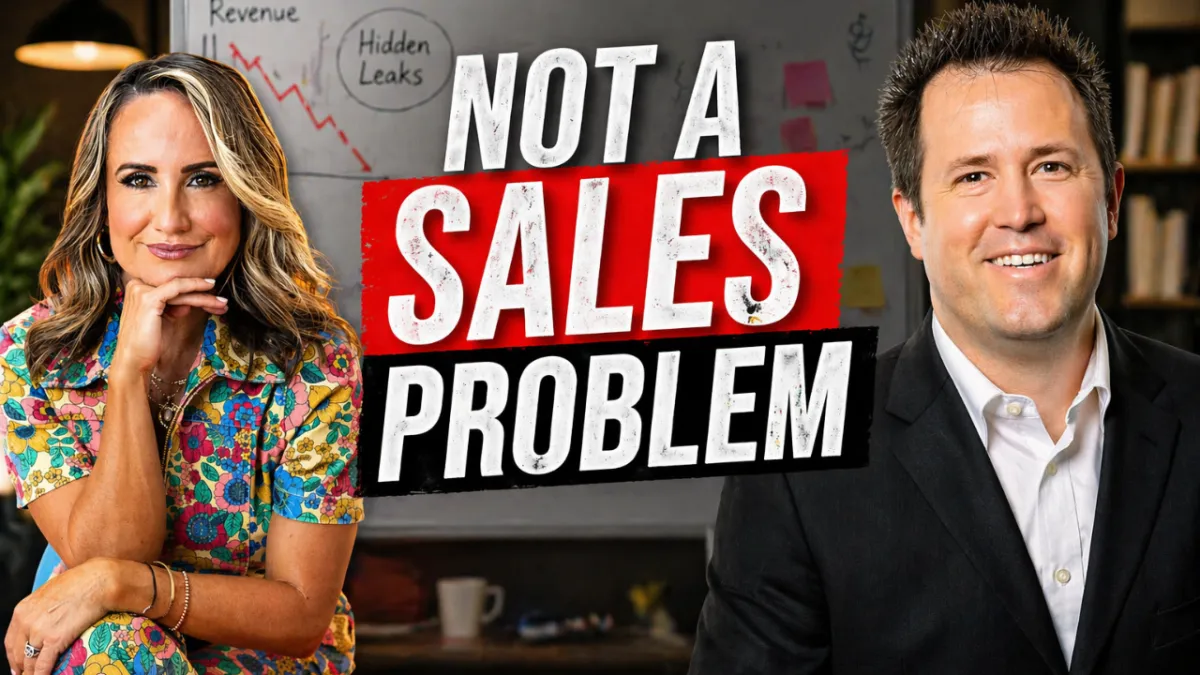
The Revenue Leak No One is Talking About | The Truth About TAM, AI, and Revenue Growth with Kurt Uhlir
"Most sales leaders unknowingly shrink their total addressable market by 10% because they don’t speak marketing." -Kurt Uhlir
Most companies are quick to blame specific problems like sales challenges, marketing gaps, or pricing issues. But what if the real issue lies in leadership disconnects, where sales leaders don’t speak marketing, the CMO doesn't understand finance, and the CEO chases revenue without considering the oxygen that sustains the business? Today’s expert, Kurt Uhlir, has been part of over 80 exits and led companies through nearly $900 million in IPOs. His insights reveal a common yet overlooked problem: misaligned leadership and communication gaps that silently choke growth opportunities.
In this post, we’ll explore how leadership teams can diagnose these disconnects, understand their impact on revenue, and make strategic shifts to unlock hidden potential. From the importance of language in leadership to understanding TAM, EBITDA, and trust, you’ll learn actionable insights to transform your organization’s growth trajectory.
How Sales Leaders Leave Revenue on the Table and Why Speaking Marketing Matters
The Hidden Leadership Disconnect That Costs You Revenue
Many organizations operate under the illusion that their revenue challenges originate solely from sales, marketing, or pricing. Yet, innovation and strategic alignment often fall short when leadership teams fail to speak a shared language. Kurt Uhlir highlights that a fundamental misalignment manifests when leaders don't understand each other's roles, goals, or the metrics that matter.
Signs of leadership misalignment include:
Confusion between lead generation and demand generation
Disjointed efforts across sales and marketing teams
Lack of shared understanding of resource allocation for short, medium, or long-term revenue goals
Kurt emphasizes, “Most sales leaders unknowingly shrink their total addressable market (TAM) by 10% because they don’t speak marketing.” This communication gap means potential customer segments get ignored or underestimated, costing companies millions in unrealized revenue.
The Vital Difference: Lead Generation vs. Demand Generation
Understanding the distinction between lead gen and demand gen is crucial. Many teams conflate these two, causing strategic misfires:
Lead Generation: Focuses on capturing contact information—people filling out forms, downloading ebooks, or scheduling meetings.
Demand Generation: Builds awareness and trust, encouraging customers to seek out your brand proactively, especially when the market is saturated or competitive.
Kurt explains that demand gen is about trust-building, especially critical during a trust recession where buyers are cautious about where they invest. For instance, a recent example he shared involves a lab that bought multiple creatine gummy brands, only to find none contained the active ingredient. This erosion of trust makes them avoid similar brands in the future, illustrating how transparency and authenticity directly influence demand.
He stresses, “If you're not the top three brand in your industry, you’ve already lost a significant share of that trust, meaning your lead gen efforts will be fighting an uphill battle.”
TAM and the Shrinking of Market Opportunities
One of Kurt’s core messages is that many sales leaders unknowingly limit their TAM by not engaging with marketing's strategic insights or understanding the full landscape. He claims that most sales teams are "bilingual" but not "trilingual," meaning they understand their customer language but fail to speak the language of marketing and finance.
How does this impact TAM?
When sales teams don’t understand the nuances of demand versus lead gen, they inadvertently overlook segments.
Leaders often don’t ask fundamental questions like, “How are resources split across short, medium, and long-term revenue goals?”
This gap results in an underestimated TAM, sometimes by as much as 10%, which translates into missed revenue opportunities. Kurt advocates that sales should be conversant in marketing's strategic frameworks, ensuring the entire organization unites around an encompassing market view.
Practical Steps to Broaden Your Market and Maximize Revenue
To bridge the language gap and expand TAM, Kurt suggests several actionable steps:
Align on Definitions and Expectations: Leaders need to clarify what good looks like in demand vs. lead gen. Ask questions like:
"What percentage of resources is focused on immediate revenue versus future growth?"
"Are our teams aligned on the definition of a qualified lead and demand signals?"
Embed Customer-Centric Communication: Leaders must understand why customers buy—what triggers demand and how trust influences decision-making. Conduct direct conversations with both sales and marketing to understand barriers.
Translate Goals Across Departments: Leaders need to facilitate language translation—turning marketing metrics into sales impact, and vice versa. This means robust communication about resource allocation and shared goals.
Move from Short-term Wins to Long-term Momentum: Kurt emphasizes investing effort in understanding customer journey phases over three timeframes: immediate, medium, and long-term. For instance, nurturing trust in potential clients today impacts future sales months or years ahead.
Educate and Communicate Financial Impact: Leaders should demystify EBITDA and other financial metrics. Kurt notes that many sales leaders are unaware that their aggressive pursuit of revenue (adrenaline) can harm profitability (oxygen). Understanding EBITDA helps teams see the broader business health, beyond just top-line growth.
Communicating Controlled Risk for Better Budgeting
A recurring challenge is how CMOs and sales leaders secure budgets, often hampered by their own short-term focus or lack of financial fluency. Kurt recommends approaching budget conversations through the lens of controlled risk:
Present clear, data-backed projections aligned with long-term outcomes.
Frame investments as risks versus potential rewards and emphasize how they contribute to EBITDA, not just top-line numbers.
Build collaborative relationships with CFOs and CEOs through transparency, shared language, and regular check-ins.
He suggests that CMOs should read books written for CFOs to understand their mindset and adopt systems thinking, recognizing how marketing investments ripple through the entire company.
The Power of Servant Leadership in High-Performance Cultures
Kurt’s approach to leadership revolves around serving the team to achieve outcomes, not controlling them through authority. He defines a servant leader as someone who prioritizes the growth and success of their team members by supporting them in reaching shared goals.
Key traits include:
Active investment in individual growth
Clear communication of expectations based on outcomes, not just activities
Emphasizing commitment over compliance
This leadership style is particularly effective with the next generation, especially Gen Z, who value purpose-driven management and personal growth. Kurt notes that such leaders foster environments where employees are attached to leaders, not just companies, leading to longer tenures and more resilient teams.
Wrap-Up: The Most Rascal Thing in Business
To cap off, Kurt shares that the most "rascal" move he’s made in business involves calling past customers, not for sales, but to understand their experiences. In some cases, he uncovered that disgruntled clients attributed their churn to individual salespeople’s actions, highlighting the importance of accountability and communication across leadership.
His advice? Regularly seeking honest feedback from customers and team members uncovers hidden issues, turning potential crises into opportunities for growth.
Final Takeaways
Leadership misalignment and language gaps silently cost revenue and market share.
Distinguishing demand generation from lead gen is crucial for strategic focus.
Broaden your TAM by aligning on definitions, investing in trust, and understanding long-term customer journeys.
Communicate about risk and budget through clear, data-driven narratives to gain buy-in.
Adopt servant leadership principles to foster long-term, high-performance teams rooted in trust and growth.
Interested in building a truly aligned, high-growth organization? Start speaking each other's language, understand your true TAM, and lead with service. For a deeper dive into these strategies, check out Kurt Uhlir’s insights at curtuloruhlir.com.
To gain complimentary access to ALL workbooks, scrips, and playbooks that Michelle discusses on the Revenue Rascals Podcast, fill out the form below. It's just a one-time sign up and SUPER easy.
Frequently Asked Questions-
What is the main issue discussed in the blog post?
The blog post discusses leadership disconnects and communication gaps between sales and marketing that can lead to missed revenue opportunities.
Who is Kurt Uhlir?
Kurt Uhlir is an expert who has been part of over 80 exits and led companies through nearly $900 million in IPOs. He shares insights on leadership and market strategies.
What is the difference between lead generation and demand generation?
Lead generation focuses on capturing contact information, while demand generation builds awareness and trust, encouraging proactive customer engagement.
What is TAM?
TAM stands for Total Addressable Market, representing the total revenue opportunity available if a product or service achieves 100% market share.
What is servant leadership?
Servant leadership is a leadership style that prioritizes the growth and success of team members by supporting them in reaching shared goals.
Summary
This blog post explores the hidden leadership disconnects that can cost companies revenue. Kurt Uhlir shares insights on how misaligned communication between sales and marketing can shrink market opportunities. The post provides actionable steps to bridge these gaps and emphasizes the importance of servant leadership in fostering high-performance cultures.


